Introduction
Social media has become much more than a place to share photos and videos. Today, it’s where customers discover brands, research products, read reviews, and make purchasing decisions.
With billions of active users across platforms like Facebook, Instagram, LinkedIn, TikTok, Pinterest, and X (formerly Twitter), businesses have unprecedented opportunities to reach their target audience.
However, social media changes constantly. New algorithms, AI-powered tools, and changing consumer behavior mean that strategies that worked a few years ago may no longer deliver the same results.
To stay competitive, businesses must keep up with the latest Social Media Marketing Trends and adapt their strategies accordingly.
In this guide, you’ll learn the most important trends shaping social media marketing in 2026 and how to use them to grow your business.
What Are Social Media Marketing Trends?
Social Media Marketing Trends are emerging strategies, technologies, and user behaviors that influence how businesses connect with audiences on social platforms.
These trends help marketers understand:
- How users consume content
- Which platforms are growing
- What types of content perform best
- How algorithms are changing
- Which marketing strategies deliver the highest ROI
Businesses that adopt new trends early often gain a competitive advantage.
Why Social Media Marketing Matters in 2026
Consumers spend hours every day using social media.
People use social platforms to:
- Discover products
- Learn new skills
- Read reviews
- Watch tutorials
- Follow creators
- Connect with brands
- Make purchasing decisions
For businesses, social media provides opportunities to:
- Increase brand awareness
- Build customer trust
- Generate website traffic
- Grow an email list
- Improve customer service
- Generate qualified leads
- Increase online sales
When combined with SEO and content marketing, social media becomes a powerful long-term growth channel.
Benefits of Social Media Marketing
A well-planned social media strategy offers several advantages.
Increase Brand Visibility
Publishing valuable content consistently helps more people discover your business.
The more visible your brand becomes, the more opportunities you have to attract customers.
Drive Website Traffic
Every post can direct users to:
- Blog articles
- Product pages
- Landing pages
- Affiliate reviews
- Service pages
This creates additional traffic beyond search engines.
Build Customer Relationships
Social media allows businesses to interact directly with customers.
Replying to comments, answering questions, and participating in conversations builds trust and loyalty.
Generate Leads and Sales
Many businesses now generate significant revenue directly from social media through:
- Product recommendations
- Affiliate marketing
- Social commerce
- Lead generation campaigns
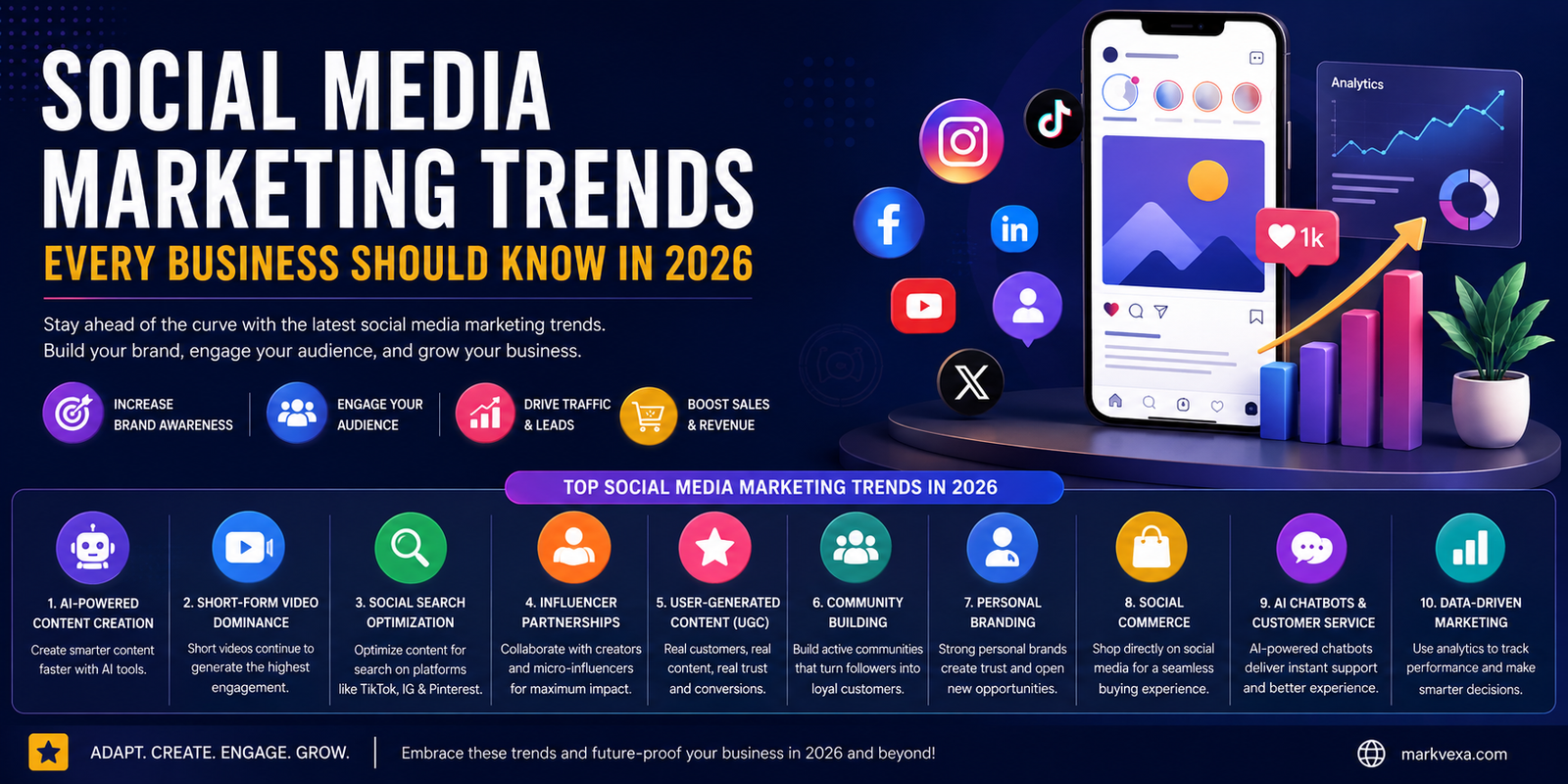
Trend #1: AI-Powered Content Creation
Artificial Intelligence has transformed the way businesses create content.
AI tools help marketers:
- Generate content ideas
- Write captions
- Create images
- Produce videos
- Schedule posts
- Analyze performance
Popular AI marketing tools include:
- ChatGPT
- Canva AI
- Jasper AI
- Copy.ai
- Adobe Firefly
While AI improves productivity, human creativity and editing remain essential for producing authentic, high-quality content.
How Businesses Can Use AI Effectively
AI works best when it supports—not replaces—your marketing efforts.
Use AI to:
- Brainstorm ideas
- Draft outlines
- Create social media captions
- Design graphics
- Generate hashtag ideas
- Analyze campaign data
Always review AI-generated content for accuracy, tone, and brand consistency before publishing.
Trend #2: Short-Form Video Continues to Dominate
Short-form videos remain one of the most engaging content formats.
Platforms leading this trend include:
- TikTok
- Instagram Reels
- YouTube Shorts
- Facebook Reels
These videos are ideal for:
- Product demonstrations
- Tutorials
- Behind-the-scenes content
- Customer testimonials
- Quick marketing tips
- Brand storytelling
Businesses that consistently publish valuable short-form videos often see higher engagement and broader reach.
Best Practices for Short-Form Videos
To maximize performance:
- Capture attention within the first few seconds
- Keep videos concise
- Add captions for accessibility
- Use high-quality visuals
- Include a clear call-to-action
- Post consistently
Authentic, educational, and entertaining videos tend to perform best.
Trend #3: Social Search Optimization
Social media is increasingly being used as a search engine.
Many users now search platforms like TikTok, Instagram, Pinterest, and YouTube for:
- Product reviews
- How-to guides
- Travel recommendations
- Business tips
- Software tutorials
- Shopping inspiration
This shift makes social search optimization more important than ever.
Optimize Your Social Content for Search
Improve discoverability by:
- Using relevant keywords in captions
- Writing descriptive titles
- Adding alt text where available
- Using targeted hashtags
- Creating valuable educational content
- Maintaining consistent branding
Optimized content is more likely to appear in both platform searches and external search engines.
Why Pinterest Deserves More Attention
Pinterest functions as both a social platform and a visual search engine.
Unlike many social networks, Pins can continue generating traffic for months or even years after they’re published.
Businesses can use Pinterest to promote:
- Blog posts
- Buying guides
- Product reviews
- Infographics
- Tutorials
- Checklists
Optimizing Pins with keyword-rich titles and descriptions can significantly increase long-term traffic.
Trend #4: Influencer Marketing Continues to Grow
Influencer marketing has become one of the most effective ways for businesses to reach targeted audiences.
Consumers often trust recommendations from creators more than traditional advertisements because influencers have built strong relationships with their followers.
Businesses can partner with:
- Industry experts
- Bloggers
- YouTubers
- TikTok creators
- Instagram influencers
- LinkedIn thought leaders
The key is choosing influencers whose audience aligns with your target market.
Focus on Micro-Influencers
While celebrity influencers have massive audiences, micro-influencers (typically 10,000–100,000 followers) often achieve higher engagement rates.
Benefits include:
- More authentic content
- Better audience trust
- Lower collaboration costs
- Higher engagement
- Strong niche communities
For many small businesses, micro-influencers deliver a better return on investment than large influencers.
Trend #5: User-Generated Content (UGC)
User-generated content (UGC) includes photos, videos, reviews, and testimonials created by your customers.
UGC helps build credibility because people tend to trust real customer experiences more than branded advertisements.
Examples include:
- Product reviews
- Customer testimonials
- Before-and-after photos
- Social media mentions
- Unboxing videos
- Success stories
Encouraging customers to share their experiences can significantly increase trust and engagement.
How to Encourage User-Generated Content
Businesses can encourage customers to create content by:
- Running contests
- Creating branded hashtags
- Asking for reviews
- Featuring customer posts
- Offering small rewards
- Sharing customer success stories
Always ask for permission before reposting someone else’s content.
Trend #6: Community Building Is More Important Than Follower Count
A large follower count doesn’t always translate into business success.
Active communities often generate better engagement, stronger customer loyalty, and more referrals.
Focus on creating conversations rather than simply broadcasting promotional content.
Ways to build a community include:
- Responding to comments
- Hosting live sessions
- Asking questions
- Creating polls
- Starting discussions
- Sharing behind-the-scenes content
- Celebrating customer achievements
People are more likely to support brands that interact with them consistently.
Trend #7: Personal Branding Drives Business Growth
Consumers increasingly connect with people rather than logos.
Founders, CEOs, marketers, and business owners who build strong personal brands often create greater trust for their companies.
Ways to strengthen your personal brand include:
- Sharing industry insights
- Publishing educational content
- Speaking at events
- Appearing in videos
- Posting consistently
- Engaging with your audience
A strong personal brand can attract customers, partnerships, and media opportunities.
Choose the Right Social Media Platforms
Every platform serves a different audience and purpose.
Best for:
- Community groups
- Local businesses
- Brand awareness
- Customer engagement
Ideal for:
- Lifestyle brands
- Fashion
- Beauty
- Travel
- Food
- Visual storytelling
Perfect for:
- B2B marketing
- Professional networking
- SaaS companies
- Business services
- Thought leadership
TikTok
Great for:
- Short-form videos
- Product demonstrations
- Brand awareness
- Younger audiences
- Viral content
Excellent for:
- Blog traffic
- DIY content
- Home decor
- Fashion
- Recipes
- Technology guides
- Affiliate marketing
Pinterest acts like a visual search engine, making it valuable for driving long-term website traffic.
YouTube
Best for:
- Tutorials
- Product reviews
- Educational content
- Software demonstrations
- Long-form videos
YouTube videos can continue attracting views and traffic long after they are published.
Build a Winning Content Strategy
Publishing random posts rarely leads to consistent results.
Instead, create a content strategy based on your audience’s interests and business goals.
A balanced content mix may include:
- Educational posts
- Industry news
- Tips and tutorials
- Customer success stories
- Product demonstrations
- Behind-the-scenes content
- FAQs
- Interactive polls
- Infographics
- Videos
Providing value consistently helps establish your brand as a trusted resource.
Maintain a Consistent Posting Schedule
Consistency is essential for audience growth.
Create a content calendar to plan:
- Post topics
- Publishing dates
- Platforms
- Content formats
- Campaign goals
Planning ahead ensures you maintain a steady flow of high-quality content.
Repurpose Your Content
Maximize your efforts by turning one piece of content into multiple formats.
For example, a blog post can become:
- Pinterest Pins
- Instagram Carousels
- LinkedIn Posts
- Facebook Updates
- TikTok Videos
- YouTube Shorts
- Email Newsletters
- Infographics
Repurposing content saves time while increasing your reach across multiple platforms.
Trend #8: Social Commerce Is Growing Rapidly
Social media is no longer just for discovering products—it’s becoming a place where customers can complete purchases without leaving the platform.
Platforms such as Instagram, Facebook, TikTok, and Pinterest now offer shopping features that simplify the buying process.
Benefits of social commerce include:
- Faster purchasing decisions
- Better customer experience
- Higher conversion rates
- Reduced checkout friction
- Increased impulse purchases
Businesses should create product-focused content that educates customers while making it easy to buy.
Optimize Your Product Posts
To improve sales through social media:
- Use high-quality product images
- Create engaging product videos
- Write benefit-focused captions
- Include clear pricing when appropriate
- Add strong calls-to-action
- Link directly to product or landing pages
People are more likely to purchase when they clearly understand the value of your product.
Trend #9: AI-Powered Customer Service
Artificial intelligence is changing how businesses communicate with customers.
AI chatbots now help companies provide faster support by answering common questions and assisting customers at any time of the day.
Common chatbot tasks include:
- Answering FAQs
- Recommending products
- Tracking orders
- Booking appointments
- Collecting customer information
- Directing users to support teams
AI should enhance customer support, while more complex issues should still be handled by human representatives.
Trend #10: Data-Driven Marketing
Successful businesses make decisions based on data rather than assumptions.
Every social media campaign provides valuable insights that can help improve future performance.
Track important metrics such as:
- Reach
- Impressions
- Engagement rate
- Click-through rate (CTR)
- Follower growth
- Website traffic
- Leads generated
- Sales
- Conversion rate
Analyzing these metrics helps identify what content resonates most with your audience.
Key Social Media KPIs
Monitoring the right Key Performance Indicators (KPIs) helps you measure success.
Engagement Rate
Shows how actively people interact with your content through:
- Likes
- Comments
- Shares
- Saves
Higher engagement often signals valuable content.
Reach
Reach measures the number of unique users who see your content.
Improving reach increases brand awareness and introduces your business to new audiences.
Click-Through Rate (CTR)
CTR measures how many users click your links after seeing your content.
A higher CTR usually indicates compelling headlines, visuals, and calls-to-action.
Conversion Rate
This measures how many visitors complete your desired action.
Examples include:
- Making a purchase
- Signing up for a newsletter
- Downloading an ebook
- Registering for a webinar
Conversions are often the most important metric because they directly impact business growth.
Best Social Media Marketing Tools
Using the right tools can help you save time and improve campaign performance.
Canva
Best for:
- Social media graphics
- Pinterest Pins
- Instagram posts
- Infographics
Buffer
Ideal for:
- Scheduling posts
- Managing multiple platforms
- Monitoring engagement
Hootsuite
Useful for:
- Social media management
- Analytics
- Team collaboration
- Scheduling campaigns
Meta Business Suite
Perfect for managing:
- Facebook Pages
- Instagram Accounts
- Messages
- Advertising campaigns
Google Analytics 4
Track:
- Social traffic
- User behavior
- Conversions
- Landing page performance
Semrush Social Toolkit
Useful for:
- Competitor analysis
- Content planning
- Performance tracking
- Social media insights
Common Social Media Marketing Mistakes
Avoid these mistakes to improve your results.
Posting Without a Strategy
Random content rarely delivers consistent growth.
Always create content that supports your business goals.
Ignoring Analytics
Without reviewing performance data, you won’t know what works.
Track results regularly and adjust your strategy based on real insights.
Posting Too Much Promotional Content
People follow brands for value—not constant advertisements.
A healthy content mix should educate, entertain, and inspire while promoting products naturally.
Ignoring Comments and Messages
Engagement is a two-way conversation.
Responding to comments and direct messages builds stronger customer relationships and improves brand loyalty.
Inconsistent Posting
Long periods of inactivity reduce visibility and audience engagement.
Maintain a consistent posting schedule using a content calendar.
Tips for Long-Term Success
Businesses that succeed on social media consistently:
- Publish valuable content
- Stay updated on platform changes
- Experiment with new content formats
- Focus on building trust
- Analyze campaign performance
- Listen to customer feedback
- Adapt to changing trends
Consistency and continuous improvement are key to long-term growth.
Frequently Asked Questions
Which social media platform is best for businesses?
The best platform depends on your audience and goals. LinkedIn is ideal for B2B marketing, Instagram and TikTok excel at visual content, Pinterest is excellent for driving long-term website traffic, and Facebook remains valuable for community engagement.
How often should businesses post on social media?
Consistency is more important than frequency. Create a realistic schedule that allows you to publish high-quality content regularly.
Is AI replacing social media marketers?
No. AI can assist with content creation, scheduling, and analytics, but human creativity, strategy, and relationship-building remain essential.
Should every business use video content?
Video is one of the most engaging content formats available. While not every post needs to be a video, incorporating short-form and educational videos can significantly improve reach and engagement.
The Future of Social Media Marketing
Social media continues to evolve at an incredible pace.
Businesses that embrace innovation and adapt to new technologies will have a significant competitive advantage.
Some of the biggest developments expected in the coming years include:
- More AI-powered content creation
- Smarter recommendation algorithms
- Personalized customer experiences
- Growth of social commerce
- Increased use of augmented reality (AR)
- More video-first content
- Improved marketing automation
- Better audience targeting
Companies that remain flexible and data-driven will be better positioned for long-term success.
Focus on Authentic Content
Consumers increasingly prefer authentic content over overly polished advertisements.
Show your audience:
- Behind-the-scenes moments
- Team introductions
- Customer success stories
- Product demonstrations
- Company culture
- Real experiences
Authenticity helps build trust and stronger relationships with your audience.
Create Content for Every Stage of the Customer Journey
Your content should support customers from discovery to purchase.
Awareness Stage
Create:
- Educational blog posts
- Short-form videos
- Infographics
- Industry insights
Consideration Stage
Publish:
- Product comparisons
- Tutorials
- Case studies
- Customer testimonials
Decision Stage
Provide:
- Product demonstrations
- Free trials
- Discount offers
- FAQs
- Buying guides
Matching content to the customer journey improves engagement and conversions.
Invest in Video Marketing
Video continues to generate some of the highest engagement across social media platforms.
Consider creating:
- Tutorials
- Product reviews
- Live streams
- Q&A sessions
- Customer interviews
- Educational videos
- Behind-the-scenes content
Repurpose long-form videos into shorter clips for TikTok, Instagram Reels, YouTube Shorts, and Facebook Reels to maximize your reach.
Monitor Industry Changes
Social media platforms regularly update their algorithms and features.
Stay informed by:
- Following official platform blogs
- Reading industry publications
- Joining marketing communities
- Attending webinars
- Testing new features early
Businesses that adapt quickly often gain an advantage over competitors.
Best Social Media Marketing Tools
Using professional tools can improve efficiency and campaign performance.
Canva
Best for:
- Social media graphics
- Pinterest Pins
- Instagram Stories
- Infographics
Buffer
Useful for:
- Scheduling posts
- Content planning
- Team collaboration
Hootsuite
Great for:
- Multi-platform management
- Analytics
- Monitoring conversations
Meta Business Suite
Ideal for:
- Facebook management
- Instagram management
- Messaging
- Advertising insights
Google Analytics 4
Track:
- Website traffic
- Social referrals
- User engagement
- Conversion performance
Semrush Social
Perfect for:
- Competitor analysis
- Social media monitoring
- Campaign tracking
- Performance reporting
Common Social Media Marketing Mistakes
Avoid these common mistakes:
- Posting inconsistently
- Ignoring audience feedback
- Publishing low-quality visuals
- Focusing only on follower count
- Neglecting analytics
- Overusing promotional content
- Ignoring SEO in captions
- Using irrelevant hashtags
- Failing to engage with comments
- Not optimizing content for mobile users
Correcting these issues can improve both engagement and long-term growth.
Frequently Asked Questions
Which social media platform is best for driving website traffic?
Pinterest, LinkedIn, Facebook, and YouTube are among the strongest platforms for driving traffic, depending on your niche and audience.
How often should businesses post?
Consistency is more important than volume. Create a realistic posting schedule that you can maintain while keeping content quality high.
Is video more effective than images?
In many cases, video generates higher engagement. However, a balanced content strategy that includes videos, images, carousels, and infographics often delivers the best results.
Should small businesses use AI for social media?
Yes. AI can assist with brainstorming, content drafting, scheduling, and performance analysis, helping small businesses save time and improve productivity.
How do I measure social media success?
Track key metrics such as:
- Reach
- Engagement
- Click-through rate
- Website traffic
- Leads
- Sales
- Return on investment (ROI)
These metrics provide a clearer picture of your overall performance.
Final Verdict
Social media remains one of the most powerful digital marketing channels for businesses in 2026. By embracing trends such as AI-powered content creation, short-form video, influencer partnerships, social commerce, and data-driven decision-making, businesses can expand their reach, strengthen customer relationships, and drive sustainable growth.
Success on social media doesn’t come from chasing every trend. It comes from understanding your audience, creating valuable content consistently, measuring results, and refining your strategy over time.
Businesses that combine creativity with analytics and maintain an authentic brand presence will be well-positioned to succeed in the ever-changing digital landscape.