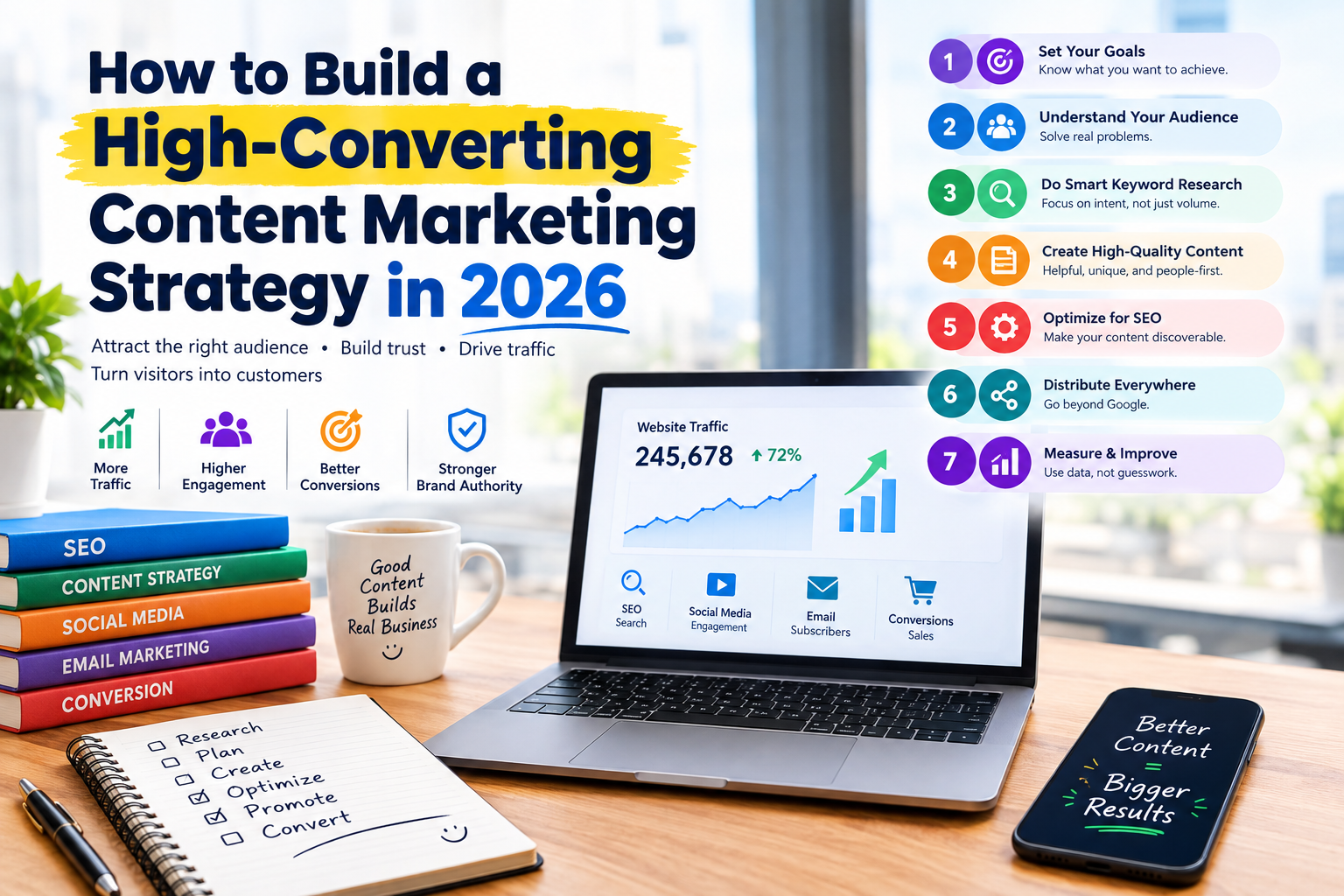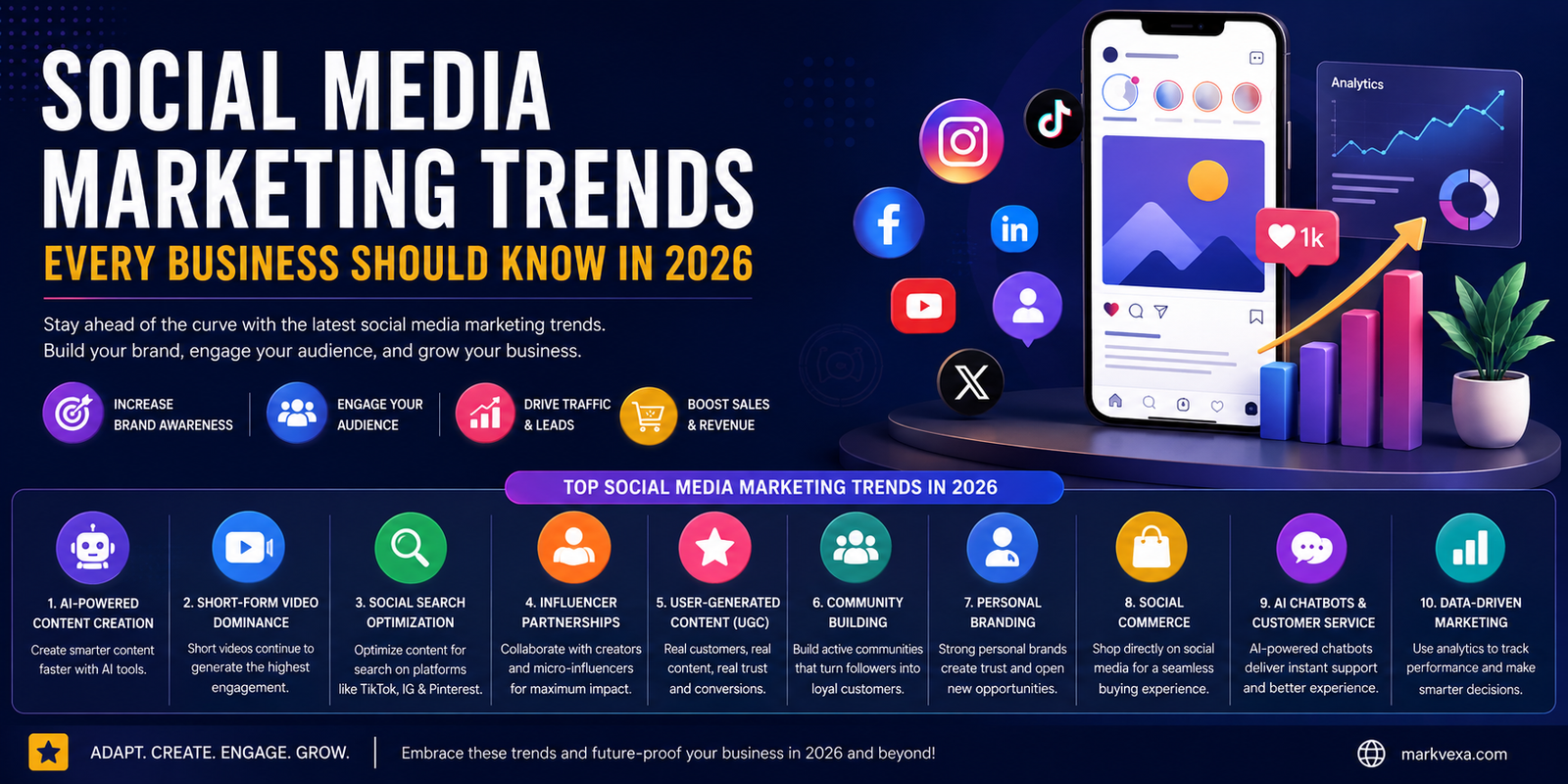
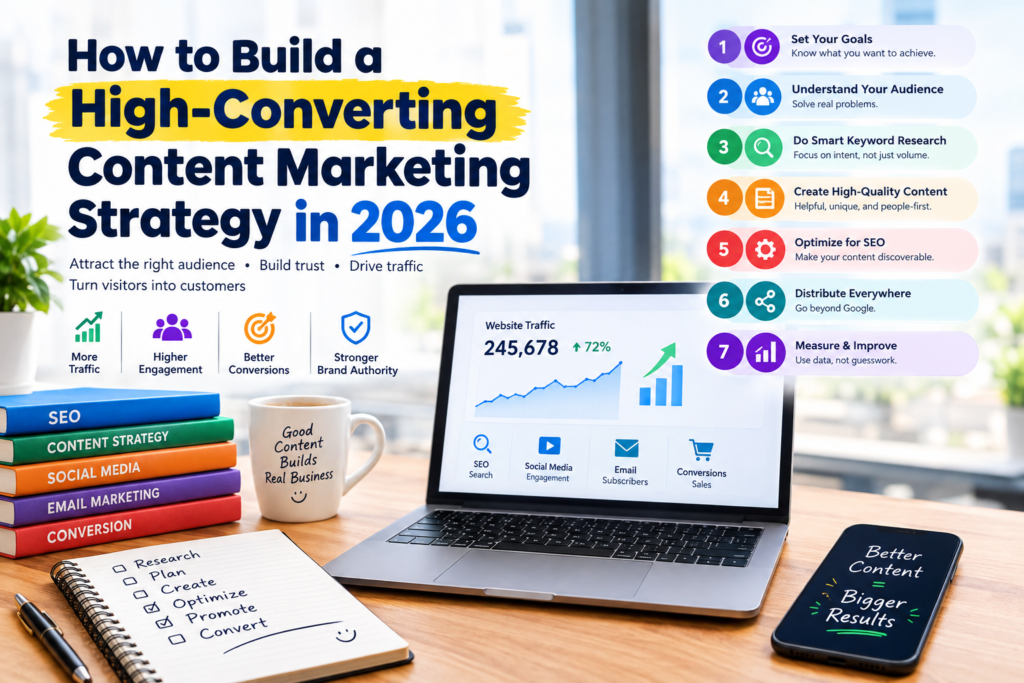
Introduction
Content marketing has changed significantly in recent years. In 2026, simply publishing blog posts and waiting for visitors is no longer enough. Businesses, publishers, SaaS companies, and online brands need a smarter approach that combines useful content, search optimization, artificial intelligence, audience research, distribution, and conversion strategy.
A successful content marketing strategy in 2026 is not about producing the largest amount of content. It is about creating the right content for the right audience, answering real questions, demonstrating expertise, and guiding visitors toward meaningful actions.
Search engines are becoming better at understanding topics, context, user intent, and content quality. At the same time, audiences have more choices than ever. They can discover information through traditional search engines, AI-powered search, social media, video platforms, communities, newsletters, and recommendation systems.
This creates both a challenge and an opportunity.
Websites that continue publishing generic content may struggle to stand out. Websites that understand their audience and consistently create genuinely useful resources can build authority, attract qualified traffic, and generate conversions over time.
In this guide, you will learn how to build a high-converting content marketing strategy in 2026, from audience research and keyword planning to AI-assisted content creation, SEO, content distribution, conversion optimization, and performance measurement.
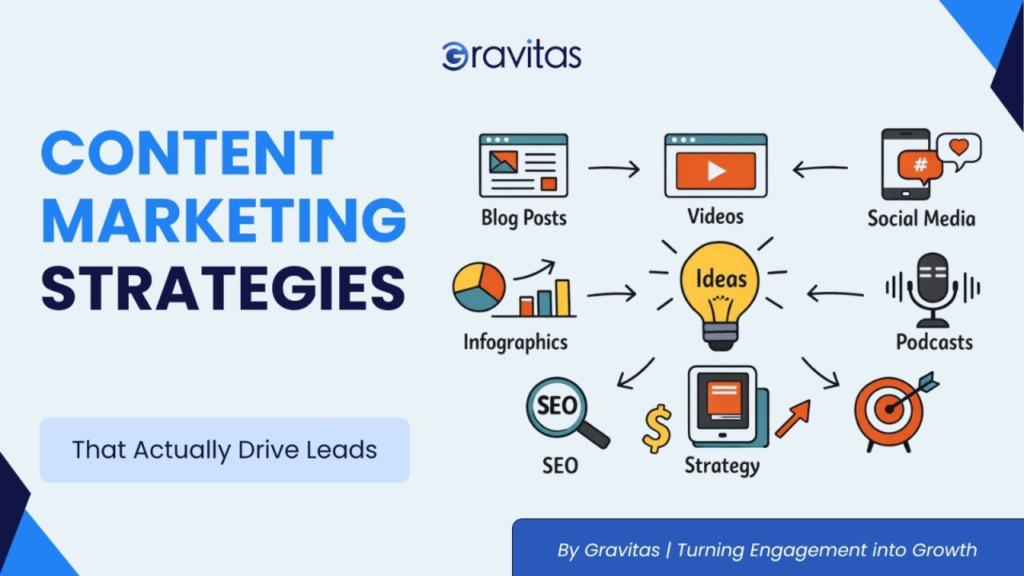
What Is a Content Marketing Strategy?
A content marketing strategy is a structured plan for creating, optimizing, publishing, distributing, and measuring content to achieve specific business objectives.
Content may include:
- Blog articles
- Product reviews
- Comparison guides
- Tutorials
- Case studies
- Videos
- Infographics
- Email newsletters
- Social media content
- Ebooks
- Research reports
- Buying guides
- Landing pages
- Frequently asked questions
The important part is not the format.
The important part is the purpose behind the content.
A strong strategy connects three things:
Business goals + audience needs + valuable content
For example, if a technology website wants to increase affiliate revenue, it should not publish random technology articles.
Instead, it can create educational content that attracts people with specific problems, comparison content for users evaluating solutions, and detailed reviews for users who are close to making a purchase.
This creates a content journey rather than a collection of unrelated articles.
Why Content Marketing Is Different in 2026
The content landscape has become more competitive.
AI has made it easier to produce articles, social posts, images, videos, and other digital assets. As a result, publishing content is no longer a major competitive advantage by itself.
The real advantage comes from quality, originality, relevance, trust, and strategic execution.
In 2026, successful content marketing increasingly requires businesses to think about multiple discovery channels.
People may discover your content through:
- AI-powered search experiences
- YouTube
- Reddit and online communities
- Email newsletters
- Social platforms
- Industry websites
- Direct recommendations
This means your content strategy should not depend entirely on one traffic source.
A strong website can use search as its foundation while distributing valuable ideas across other channels.
The Biggest Content Marketing Mistake in 2026
One of the biggest mistakes is creating content simply because competitors have published similar articles.
For example, imagine a website sees a competitor ranking for:
Best AI Tools for Small Businesses
The website creates another article with nearly the same structure, similar information, and no original perspective.
Even if the article is well written, it may struggle to stand out.
Instead, ask:
What can we provide that the existing results do not?
You might provide:
- Better comparisons
- Real examples
- More practical explanations
- Clearer recommendations
- Original screenshots
- First-hand observations
- Updated information
- Different use cases
- More transparent pros and cons
- Better organization
- Answers to questions competitors ignore
The goal should be to create the most useful resource for the intended audience, not simply another version of what already exists.
Step 1: Define Your Content Marketing Goals
Before creating content, determine exactly what you want it to accomplish.
Your goals could include:
- Increasing organic traffic
- Generating leads
- Increasing affiliate clicks
- Increasing sales
- Building email subscribers
- Improving brand awareness
- Establishing topical authority
- Increasing returning visitors
- Supporting product adoption
Different goals require different types of content.
For example, informational articles can be excellent for attracting new visitors, while comparison pages and product reviews can be more suitable for commercial intent.
Define measurable objectives rather than vague goals.
Instead of:
“I want more traffic.”
Think:
“I want to increase qualified organic traffic by consistently publishing and improving content around high-value technology and software topics.”
This gives your content strategy a clear direction.
Step 2: Understand Your Target Audience
The foundation of every successful content marketing strategy is understanding the people you want to reach.
Ask:
- Who are they?
- What problems are they trying to solve?
- What questions do they ask?
- What products are they considering?
- What frustrates them?
- What prevents them from taking action?
- What information would make them trust a recommendation?
For a technology-focused website, your audience might include:
- Small business owners
- Entrepreneurs
- Digital marketers
- Freelancers
- Content creators
- SEO professionals
- Students
- Software users
- Technology enthusiasts
Each group can have different needs.
A beginner may want a simple explanation, while an experienced marketer may want a detailed comparison.
Understanding these differences allows you to create content for specific search intents rather than writing generic articles for everyone.
Step 3: Build a Customer Journey
Your audience does not always arrive at your website ready to buy.
Some visitors are learning.
Others are researching.
Some are comparing products.
Others are ready to take action.
Your content should address these different stages.
Awareness Stage
People are discovering a problem.
Examples:
- What is SEO?
- How does content marketing work?
- What are AI tools?
- How can I improve my website?
Create educational content that answers these questions clearly.
Consideration Stage
The reader is evaluating possible solutions.
Examples:
- Best SEO tools
- Best AI writing software
- Semrush vs Ahrefs
- Best project management tools
Comparison and review content can be particularly valuable here.
Decision Stage
The visitor is ready to make a decision.
Examples:
- Semrush pricing
- Ahrefs review
- Canva Pro review
- Best alternatives to a specific software product
At this stage, clear calls to action and transparent information can help visitors make informed decisions.
Step 4: Conduct Smarter Keyword Research
Keyword research remains an important part of SEO, but modern keyword research should go beyond search volume.
Look at:
- Search intent
- Relevance
- Competition
- Business value
- Long-tail opportunities
- Related questions
- Commercial intent
- Existing search results
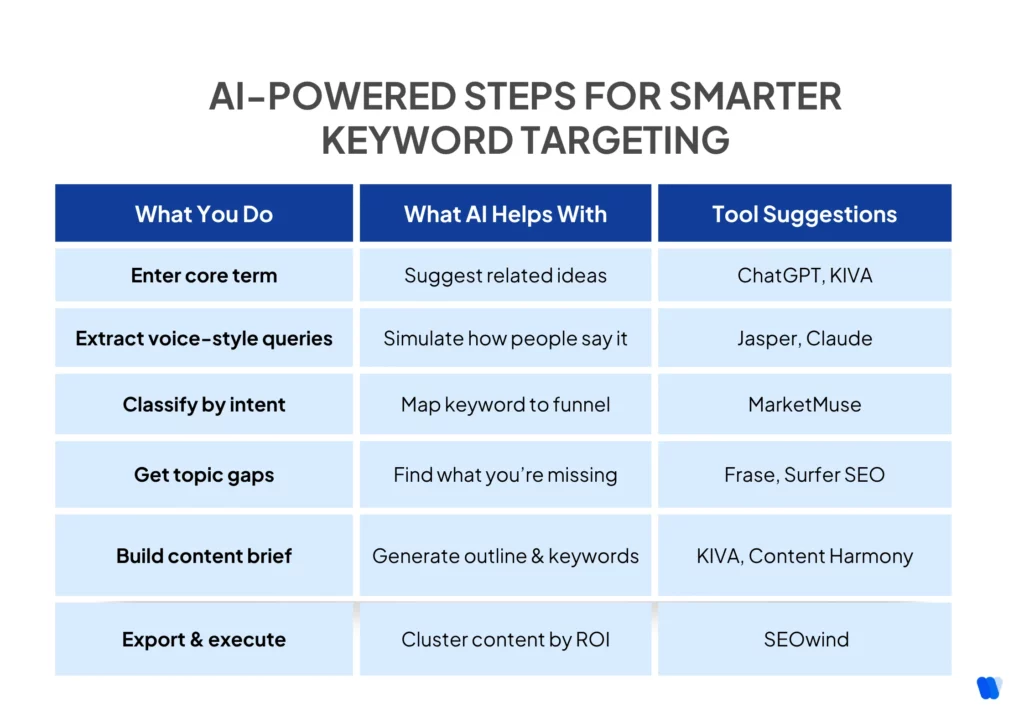
Instead of targeting only broad terms, build groups of closely related topics.
For example, around content marketing strategy, you could target:
- Content marketing strategy
- Content marketing plan
- Content strategy framework
- SEO content strategy
- Content marketing funnel
- Content calendar
- Content distribution strategy
- Content marketing tools
- Content marketing metrics
- Content marketing ROI
This approach helps your website build comprehensive topical coverage.
Step 5: Focus on Search Intent
Ranking for a keyword is not enough.
Your content needs to satisfy the reason behind the search.
Suppose someone searches:
Best email marketing software
They probably want comparisons, features, pricing information, advantages, disadvantages, and recommendations.
If your page only explains what email marketing is, it may not satisfy that intent.
Always ask:
What does the searcher expect to find?
Then structure the content around that expectation.
Search intent can be:
- Informational
- Commercial
- Navigational
- Transactional
Understanding intent can significantly improve the relevance of your content.
Step 6: Build Topic Clusters
A topic cluster is a group of connected articles organized around a broader subject.
For example:
Main Topic
Content Marketing Strategy
Supporting Topics
- Content marketing for small businesses
- SEO content strategy
- Content calendar guide
- Content promotion strategies
- Content marketing tools
- Content marketing metrics
- Content marketing funnel
- How to measure content ROI
Your main article can link to supporting resources, while supporting articles can link back to the main guide.
This creates a logical website structure.
It also helps visitors discover additional information without returning to search engines.
Step 7: Create People-First Content
In 2026, creating content simply to satisfy algorithms is a weak strategy.
Your first priority should be the reader.
Strong content should:
- Answer the main question
- Provide useful information
- Be easy to understand
- Use logical organization
- Include practical examples
- Avoid unnecessary repetition
- Provide original value
- Be accurate and current
Long content is useful when the subject requires depth.
But do not add unnecessary paragraphs just to reach a specific word count.
The goal is complete and useful, not simply long.
Step 8: Use AI as an Assistant, Not a Replacement
Artificial intelligence has become an important part of content workflows in 2026.
AI can help with:
- Brainstorming
- Topic research
- Content outlines
- Keyword grouping
- Headline ideas
- Summaries
- Editing
- Content repurposing
- Research organization
- Generating content variations

However, blindly publishing AI-generated text can create problems.
AI-assisted content should be reviewed, fact-checked, edited, and improved by a human.
Add value through:
- Original insights
- Examples
- Experience
- Data
- Clear explanations
- Unique comparisons
- Expert commentary
- Practical recommendations
Think of AI as a productivity tool rather than a substitute for strategy and judgment.
Step 9: Create Better Headlines
Your title is often the first thing a potential visitor sees.
A strong headline should communicate:
Topic + benefit + reason to click
For example:
How to Build a High-Converting Content Marketing Strategy in 2026
is stronger than:
Content Marketing Strategy
because it clearly communicates the topic, outcome, and current-year relevance.
Avoid misleading headlines.
The article should deliver what the headline promises.
Step 10: Structure Articles for Easy Reading
Online readers often scan before deciding whether to read an entire article.
Make your content easy to navigate.
Use:
- Short paragraphs
- Clear H2 headings
- H3 subheadings
- Bullet points
- Tables where useful
- Bold important concepts
- Examples
- Summary sections
- Clear calls to action
Start important sections with direct answers.
Then provide deeper explanations.
This structure helps both readers who want quick answers and readers who want comprehensive information.
Step 11: Optimize Your Content for SEO
SEO should be part of the content creation process from the beginning.
Optimize important elements such as:
SEO Title
Include the primary keyword naturally.
URL
Keep the URL short and descriptive.
Headings
Use relevant keywords and related concepts where appropriate.
Meta Description
Write a compelling description that accurately summarizes the page.
Images
Use relevant images and descriptive alt text when appropriate.
Internal Links
Connect related pages across your website.
External References
Where appropriate, reference trustworthy sources to support factual claims.
Most importantly, avoid keyword stuffing.
Natural language and useful information should come first.
Step 12: Build Strong Internal Links
Internal linking is especially important for content-heavy websites.
Imagine you publish an article about:
How to Build a Content Marketing Strategy
That article could naturally connect to content about:
- SEO techniques
- Email marketing
- Social media marketing
- AI writing tools
- SEO software
- Content creation tools
These links create pathways through your website.
They can also help search engines understand relationships between pages.
Use descriptive anchor text and make sure each link is relevant.
Step 13: Add Conversion Opportunities
A high-traffic article is not automatically a high-converting article.
You need to give visitors relevant opportunities to take action.
Depending on your business, a conversion could be:
- Joining an email list
- Clicking an affiliate link
- Reading a related review
- Signing up for software
- Downloading a guide
- Requesting information
- Buying a product
The CTA should fit the reader’s intent.
For example, someone reading an article about SEO strategies may naturally be interested in an SEO tool comparison.
The transition should feel helpful rather than forced.
Step 14: Use Comparison and Review Content
Commercial content can be particularly valuable for websites in the technology and SaaS space.
Examples include:
- Product reviews
- Software comparisons
- Alternatives
- Pricing guides
- Feature comparisons
- Best-tool roundups
A strong review should not simply praise a product.
Explain:
- What the product does
- Who it is for
- Main features
- Advantages
- Limitations
- Pricing considerations
- Alternatives
- Important use cases
Transparent content can help build reader trust.
Step 15: Create a Content Calendar
A content calendar turns ideas into an organized publishing plan.
Your calendar can track:
- Article title
- Primary keyword
- Search intent
- Category
- Content type
- Target audience
- Publication date
- Internal links
- CTA
- Update date
- Promotion channels
Plan content around topic clusters rather than publishing completely unrelated subjects.
This makes your website more coherent and easier to grow.
Step 16: Distribute Content Beyond Google
SEO is important, but relying on a single traffic source is risky.
Repurpose your best content across relevant platforms.
Turn major articles into visually appealing Pinterest graphics.
Guides, tutorials, comparisons, and evergreen content can work particularly well in visual discovery channels.
Convert important insights into short educational posts.
Send useful summaries and newly published articles to subscribers.
Video
Turn detailed guides into short or long-form video content.
Online Communities
Answer questions genuinely and provide useful information without excessive promotion.
One strong article can therefore become an entire content distribution campaign.
Step 17: Refresh Existing Content
Content marketing does not end when you publish an article.
Existing pages can become some of your most valuable assets.
Review old articles regularly.
Look for:
- Outdated information
- Broken links
- Missing sections
- Weak introductions
- Poor internal linking
- Old screenshots
- Outdated product information
- Weak CTAs
If a page already has search impressions, improving it may be more efficient than starting from zero.
Content optimization should be continuous.
Step 18: Measure the Right Metrics
Do not measure your strategy only by page views.
Track:
- Organic traffic
- Search impressions
- Click-through rate
- Keyword visibility
- Engagement
- Returning visitors
- Affiliate clicks
- Lead generation
- Email signups
- Conversion rate
- Revenue
The most important metric depends on your objective.
If your goal is affiliate revenue, clicks and conversions matter more than raw traffic.
If your goal is brand awareness, visibility and audience growth may matter more.
Step 19: Improve Content Based on Performance
Use your data to identify opportunities.
High Impressions + Low Clicks
Your page may need a better title or meta description.
Ranking Near the First Page
Improve content depth, internal links, structure, and topical coverage.
High Traffic + Low Conversions
Review your CTA, user journey, offer relevance, and page structure.
Declining Traffic
Check whether the content has become outdated or whether competitors are providing better resources.
This creates a continuous optimization process:
Publish → Measure → Learn → Improve → Republish
Step 20: Build a Sustainable Content System
The strongest content marketing strategies are systems rather than isolated campaigns.
A sustainable system can look like this:
Research
Understand your audience and identify opportunities.
↓
Plan
Build topic clusters and prioritize valuable topics.
↓
Create
Produce useful, original content.
↓
Optimize
Improve SEO, structure, internal links, and conversion elements.
↓
Publish
Release the content with a clear purpose.
↓
Distribute
Promote the content across relevant channels.
↓
Measure
Analyze traffic, rankings, engagement, and conversions.
↓
Improve
Update and expand the content based on evidence.
This system can be repeated for months and years.
Content Marketing Trends to Watch in 2026
Several developments are shaping content marketing in 2026.
AI-Assisted Search
Search behavior is increasingly influenced by AI-powered experiences.
This makes it important to create content that clearly answers questions and demonstrates useful expertise.
First-Hand Value
Generic information is easy to reproduce.
Original experiences, testing, examples, comparisons, screenshots, and practical observations can make content more valuable.
Multi-Channel Discovery
People no longer discover information through traditional search alone.
Strong brands can benefit from being visible across search, social platforms, communities, video, newsletters, and other relevant channels.
Short-Form Content
Short videos and concise educational posts can introduce audiences to deeper resources.
Use short-form content as a discovery mechanism rather than replacing comprehensive resources entirely.
Topical Authority
Publishing connected content around a specific subject can help establish a website as a useful destination for that topic.
Trust and Transparency
Audiences increasingly want to know who created content, why recommendations were made, and whether commercial relationships exist.
Transparency can strengthen credibility.
A Practical Content Marketing Strategy for 2026
If you are starting today, you do not need an enormous team.
You can begin with a simple process.
First, select a specific niche.
Then identify your audience.
Research their problems and search behavior.
Choose several core topics.
Build pillar pages and supporting articles.
Optimize every important page for search intent and usability.
Add relevant internal links.
Create clear conversion opportunities.
Promote your strongest content through multiple channels.
Monitor performance.
Update successful pages.
Then repeat the process.
The objective is not to create hundreds of random pages.
The objective is to build a connected library of valuable resources.
Final Thoughts
Building a high-converting content marketing strategy in 2026 requires more than publishing articles consistently.
The most successful strategy starts with the audience.
Understand what people need. Discover what they search for. Identify their intent. Build content around their problems. Provide information that is genuinely useful. Use AI to improve efficiency without sacrificing originality or human judgment.
Then connect your content into a larger system.
Use SEO to increase discoverability. Use internal linking to improve navigation. Use reviews and comparisons to support commercial decisions. Use social media, Pinterest, email, video, and communities to expand distribution.
Most importantly, measure the results.
A successful content strategy is never completely finished.
You publish, learn, improve, and publish again.
In 2026, the websites most likely to stand out are not necessarily those producing the most content. They are the ones that consistently provide useful information, clear answers, original value, trustworthy recommendations, and a better experience for their audience.
When every piece of content has a clear purpose, your website can move beyond simply generating traffic.
It can become a trusted resource that attracts the right visitors, builds long-term authority, creates meaningful engagement, and turns attention into measurable business results.
Author: Hassan Abdirahman